

Summer Oil Tank Maintenance: Essential Tips for UK Homeowners
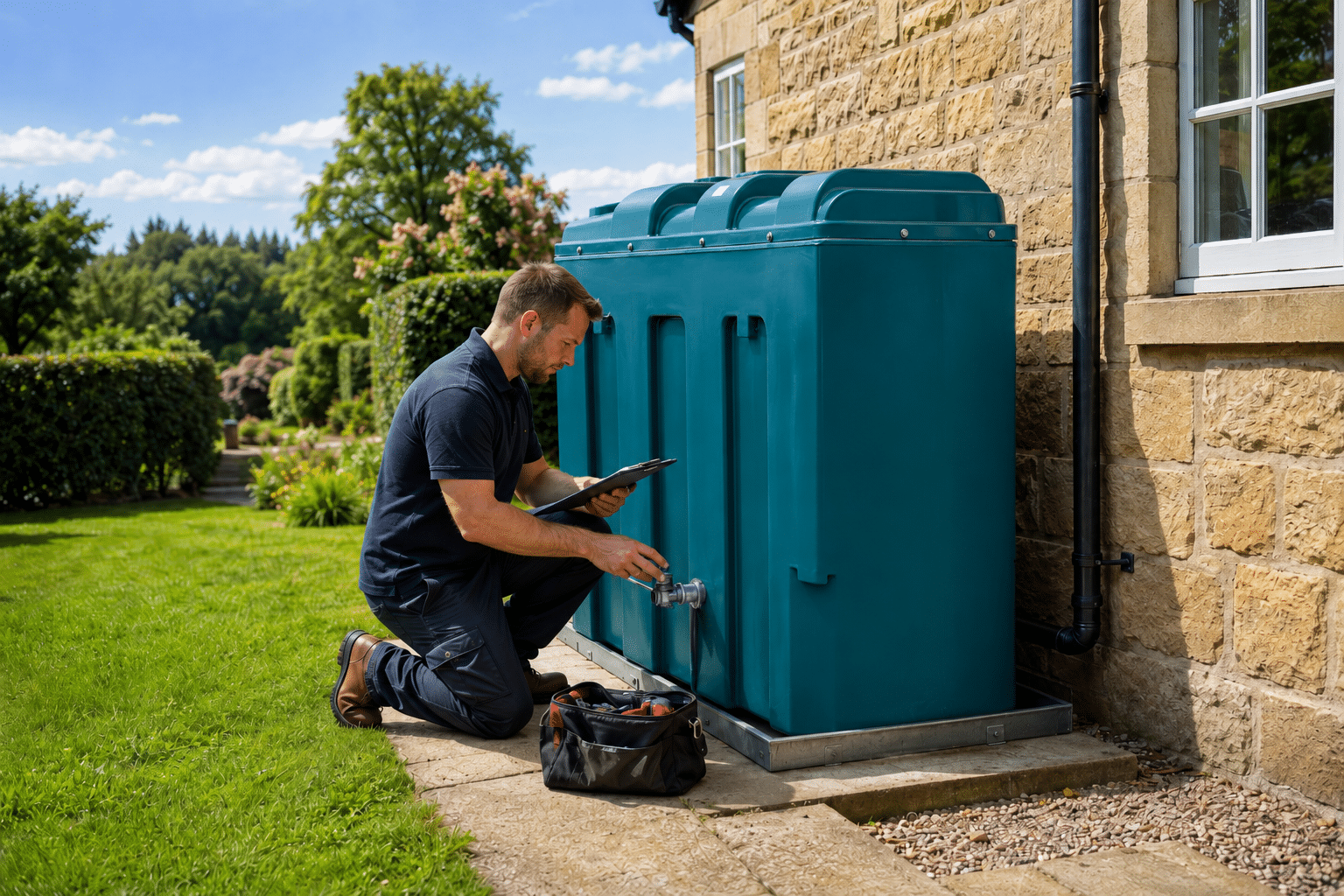
Summer is one of the best times for UK homeowners to check the condition of their heating oil tank. The weather is usually drier, access around the garden is easier, and there is still time to deal with cracks, leaks, base problems, water contamination or replacement before heating demand increases.
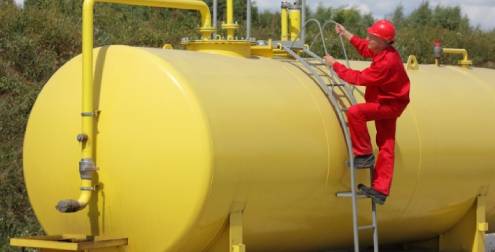
A summer oil tank maintenance check should include the tank body, base, pipework, fittings, caps, gauges, surrounding vegetation, delivery access and any signs of oil staining or fuel smells. GOV.UK recommends regular checks for damage or leaks, and an annual inspection by someone registered with a competent person scheme.
Oil Tanks Plus helps UK homeowners with oil tank maintenance, oil tank installation, oil tank removal and oil tank replacement. This guide explains what to check, what warning signs matter, and when to ask for professional advice.
Check the tank
- Cracks, splits, dents or distortion
- Bulging, warping or whitening on plastic tanks
- Rust, corrosion or flaking paint on steel tanks
- Oil staining, damp patches or strong fuel smells
Check the installation
- Cracked, sinking or uneven base
- Leaning, movement or poor support
- Damaged pipework, valves or filters
- Loose caps, faulty gauges or poor seals
Check the area
- Overgrown plants or hidden access points
- Blocked delivery route or unsafe fill point
- Poor lighting, no lock or weak security
- Water, sludge or repeated boiler issues
Quick answer: homeowners should visually check their oil tank at least monthly and arrange professional advice if they notice damage, leaks, strong oil smells, unstable supports, damaged pipework, water contamination or any change from the last inspection.
Better access, better visibility and less winter pressure
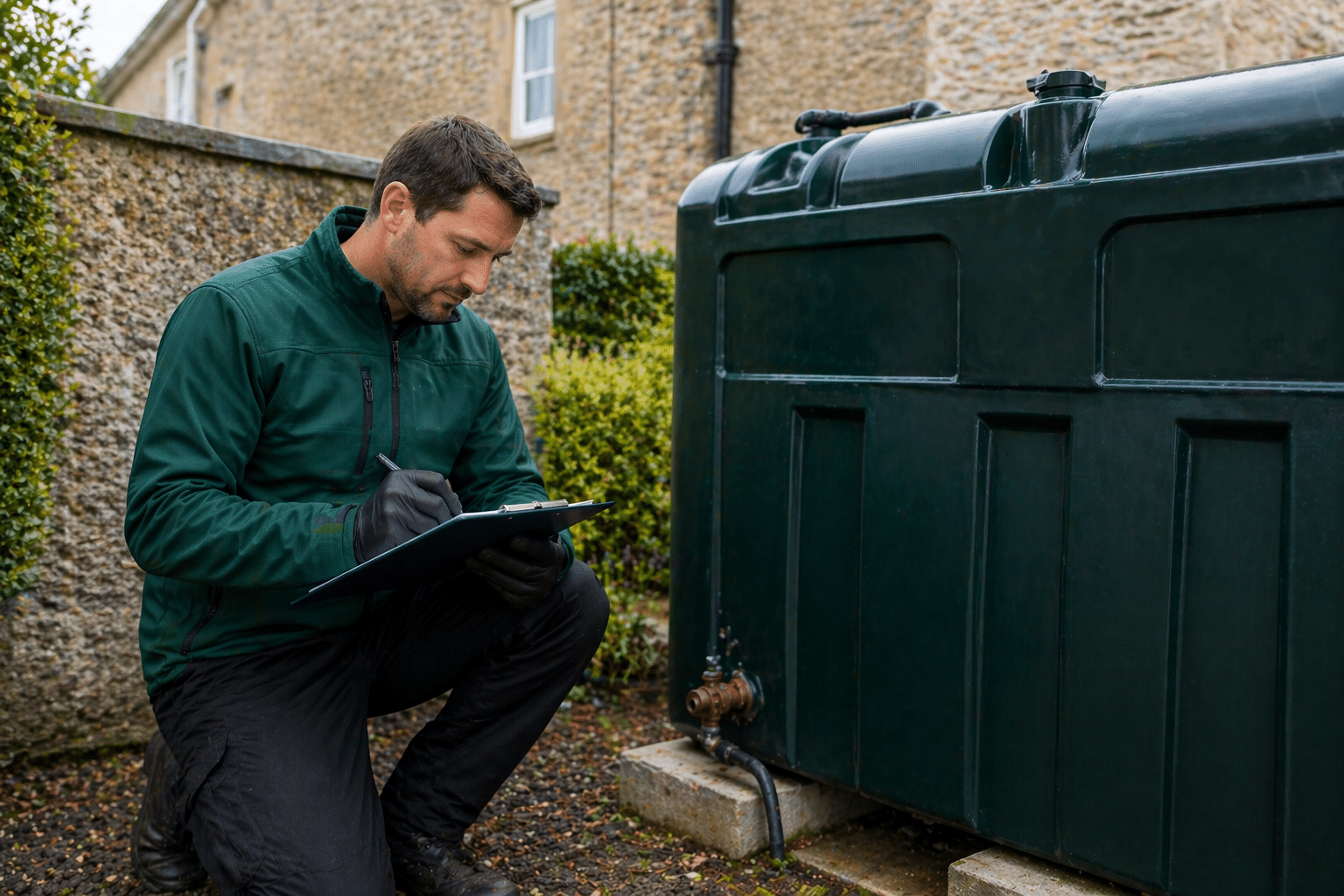
Summer gives you a practical window to inspect your oil tank before colder weather returns. The ground is often drier, vegetation can be cleared back more easily, and access around the tank is usually safer than during wet or icy weather.
Finding a problem in summer is also less disruptive. A cracked tank, poor base, leaking fitting or blocked access route can often be dealt with before the heating system is needed every day.
What summer maintenance helps prevent
- Emergency winter breakdowns
- Oil leaks and environmental contamination
- Water entering the tank through poor seals or damaged caps
- Sludge reaching filters, pipework or the boiler
- Missed oil deliveries due to poor access
- Last-minute tank replacement in bad weather
-
Inspect the tank body for visible damage
Walk around the tank and look at every visible side. Plastic tanks should be checked for cracks, splits, whitening, bulging, warping, dents and distortion around the base or corners. Steel tanks should be checked for rust, corrosion, pitting, flaking paint, damp patches and staining around seams or welds.
If the tank is damaged, distorted or looks different from your last check, arrange professional advice before relying on it through another winter.
-
Look for oil stains, damp patches and strong fuel smells
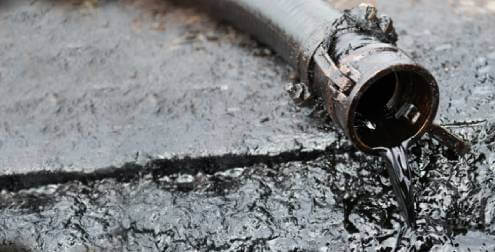
Check the ground underneath and around the tank. Warning signs include dark patches, oily residue, stained paving, dead grass, damp-looking soil, oil marks near pipework and strong heating oil smells.
A leak may come from the tank body, pipework, filters, fittings, valves or the fill point. If you suspect a leak, do not wash the area down and do not ignore it.
-
Check the base and supports
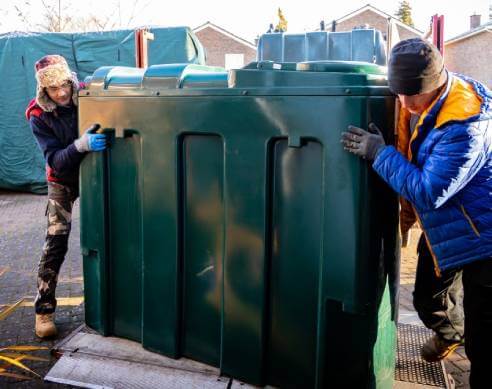
A full heating oil tank is extremely heavy, so it needs a stable, level and suitable base. Look for cracked concrete, sinking ground, leaning, uneven slabs, gaps under the tank, water pooling, tree-root movement or crumbling supports.
If the tank appears unsupported, tilted or unstable, get it checked before your next oil delivery.
-
Clear vegetation and garden clutter
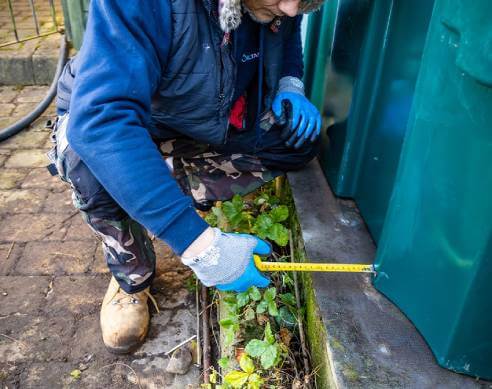
Summer growth can hide damage and restrict inspection access. Cut back long grass, weeds, bushes, branches and climbing plants. Remove garden tools, plant pots, timber, hoses, bins, furniture and anything stored too close to the tank.
The aim is not to leave the area bare. The aim is to keep enough clear space for safe inspection, delivery and maintenance.
-
Inspect pipework, valves, caps, vents and gauges
The tank is only one part of the heating oil system. Check visible pipework, filters, fittings, valves, caps, vents and gauges for corrosion, staining, loose parts, cracks, missing caps, impact damage or anything that looks insecure.
Damaged caps or poor seals can allow water and debris into the tank. A faulty gauge can also make it harder to spot unusual fuel loss.
-
Watch for water, sludge and contaminated fuel
Water can enter through poor seals, damaged caps, condensation or tank deterioration. Over time, water and sediment can contribute to sludge, corrosion, blocked filters and boiler problems.
Warning signs include boiler lockouts, poor heating performance, repeated engineer callouts, blocked filters, unusual odours, cloudy fuel, water in the bund or a sudden change in oil use.
-
Keep oil delivery access clear
Before your next delivery, check that the driver can safely reach the fill point. Remove vehicles, bins, garden furniture, loose materials and overgrown plants from the access route.
Clear access reduces the risk of missed deliveries, delivery delays and avoidable safety issues. It also helps engineers carry out inspections, servicing or replacement work more efficiently.
-
Review tank security
Heating oil is valuable, so check whether your tank is protected against theft, tampering and accidental damage. Consider whether the fill cap is lockable, the area is well lit, the tank is visible from the house and whether a tank alarm or level monitor would be useful.
Security should never block safe access, restrict ventilation or interfere with gauges, vents or pipework.
-
Check fencing, screening and landscaping
Fencing, planting and screening can hide a tank from view, but it must not stop inspections, trap moisture, block the fill point, hide leaks or fall against the tank in bad weather.
Trim plants back, check posts and panels are stable, and make sure the tank remains easy to inspect from all practical sides.
-
Book professional advice if anything looks unsafe
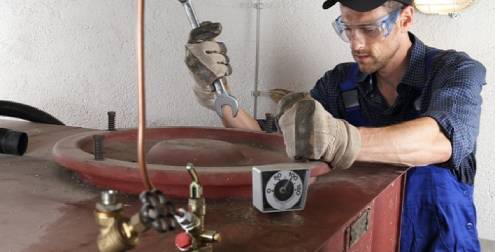
Homeowners can carry out basic visual checks, but damage, leaks, contamination, unstable bases, poor pipework and replacement decisions need professional assessment. If the tank is old, damaged, leaking or poorly supported, book advice before winter.
For help, arrange an oil tank maintenance check or request a quote for replacement through Oil Tanks Plus.
Not sure whether your oil tank is safe for another winter?
If you have noticed cracks, rust, oil smells, an unstable base, poor access or repeated boiler issues, it is better to get advice before the colder months return.
Call a professional if you notice:
- Cracks, splits, bulging or distortion
- Rust, corrosion, pitting or damp seams
- Strong heating oil smells
- Oil stains, damp patches or dead vegetation
- A cracked, sinking or unstable base
- Damaged pipework, valves, filters or fittings
- Missing, damaged or loose caps
- Water, sludge or repeated boiler problems
- A sudden or unexplained drop in oil level
- A tank that appears old, brittle or unsuitable
Do not try to solve these problems yourself
Simple homeowner maintenance means visual checks, clearing vegetation, keeping access safe and spotting warning signs. It does not mean dismantling fittings, patching cracks, moving the tank, cleaning inside the tank or pumping out oil without the right equipment.
You should not use DIY sealants, temporary patches or homemade repairs on a damaged or leaking oil tank. These can fail, make contamination worse and delay proper action.
If you think the tank is leaking, keep people and pets away, avoid using the tank as normal, stop oil reaching drains or water if safe to do so, and contact a professional.
Summer can be a practical time to replace an oil tank because access is usually easier, the ground is often drier and you are less likely to be relying heavily on the heating system every day.
You may need to consider oil tank replacement if the tank is cracked, leaking, badly corroded, bulging, unstable, repeatedly contaminated or no longer suitable for its location.
A professional inspection can confirm whether maintenance is enough or whether replacement is the safer long-term option.
Which replacement tank might you need?
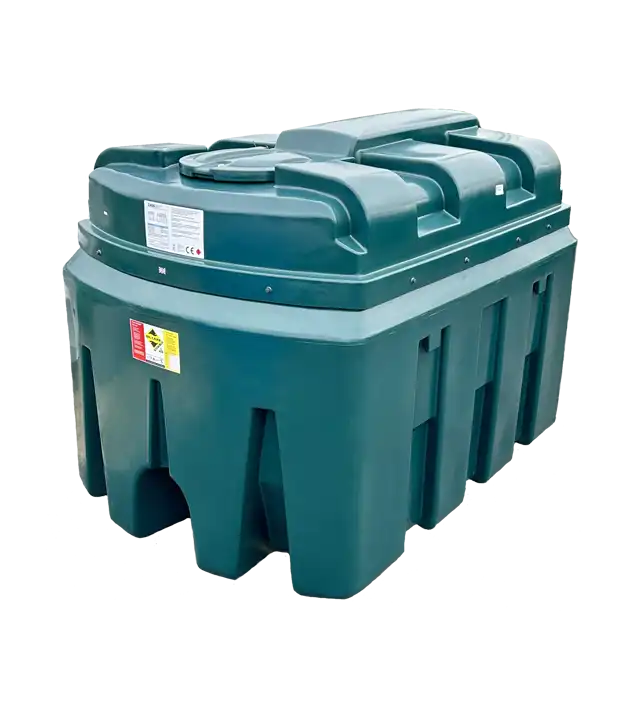
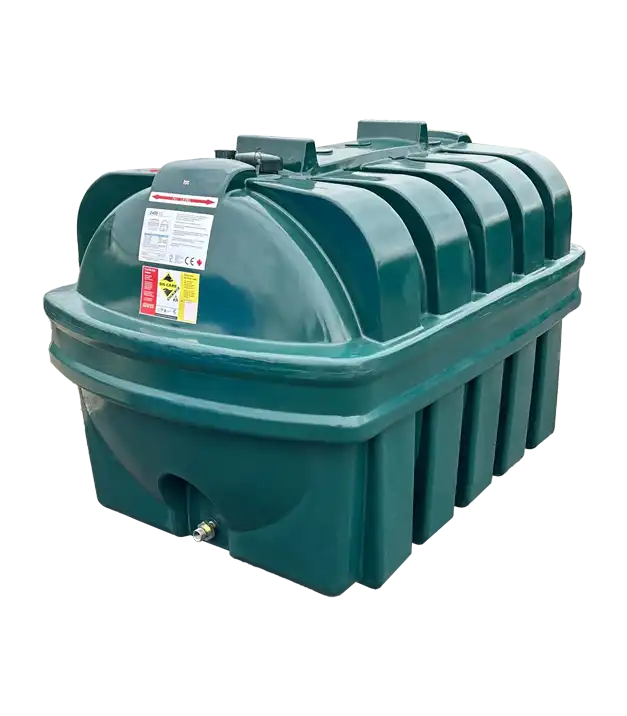
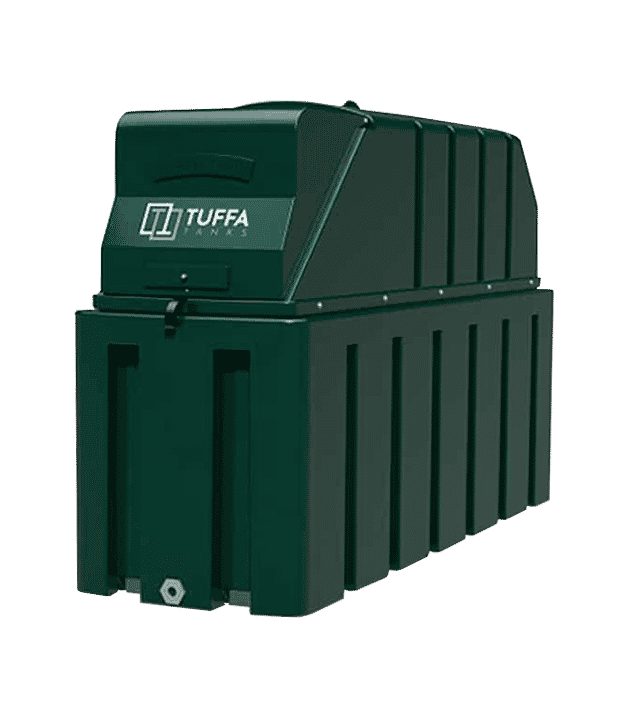
- Bunded oil tanks: suitable for many domestic and commercial situations because the outer bund provides secondary containment.
- Single skin oil tanks: only suitable in specific low-risk domestic situations after proper assessment.
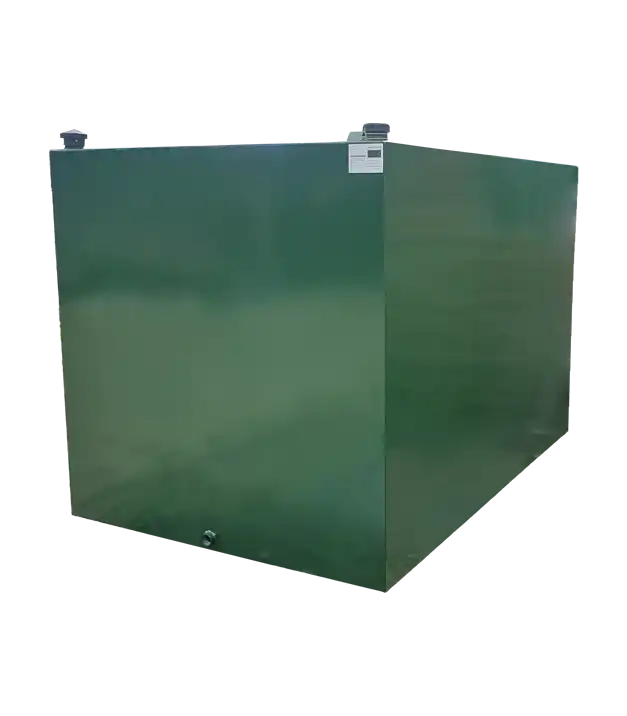
- Steel oil tanks: useful for certain sites where strength, durability or bespoke sizing is required.
- Fire-rated oil tanks: useful where standard separation distances are difficult or additional fire protection is needed.
Browse the Oil Tanks Plus oil tank range or request expert advice if you are unsure which option fits your site.

Oil tank advice, maintenance and replacement across the UK
Oil Tanks Plus has over 25 years of experience helping homeowners with oil tank installations, replacements, removals and maintenance. If your summer check has raised concerns, our team can help assess your current tank, advise on the right replacement and arrange professional installation where required.
Request an oil tank quote or speak to our team about the safest next step for your property.
The following sources are useful for general oil tank safety, storage and spill guidance:
- GOV.UK guidance on storing oil at your home or business
- OFTEC advice on household oil tank checks
- Natural Resources Wales guidance on checking household oil tanks for leaks
- Buckinghamshire Council guidance on heating oil leaks and spills
This article is general guidance for UK homeowners. Oil tank installations, repairs, decommissioning, fuel handling and replacement decisions should be assessed by a competent professional.
What oil tank maintenance should be done in summer?
Summer oil tank maintenance should include checking the tank for cracks, bulges, rust, oil stains, fuel smells, damaged fittings, base movement and poor access. You should also clear vegetation, check the delivery route, review security and arrange professional advice if anything looks damaged, unsafe or different from your last check.
How often should I check my heating oil tank?
A monthly visual check is a sensible routine for homeowners. GOV.UK also advises that oil storage containers should be inspected every year by someone registered with a competent person scheme.
What are the warning signs of an oil tank problem?
Common warning signs include oil stains, strong fuel smells, cracks, splits, bulging, whitening or discolouration on plastic tanks, rust or corrosion on metal tanks, damaged pipework, base movement, water in the bund, repeated boiler issues and sudden changes in oil level.
Is summer a good time to replace an oil tank?
Yes. Summer is often a practical time to replace an oil tank because access is usually easier, the ground is often drier and the heating system is usually under less pressure than it would be in winter.
Should I clear plants around my oil tank?
Yes. Vegetation should be cut back so the tank, base, pipework and fittings can be inspected properly. Overgrown plants can hide leaks, trap moisture and make access harder for deliveries, servicing and professional inspections.
Can I repair a leaking oil tank myself?
No. A leaking or damaged heating oil tank should be assessed by a qualified professional. DIY patches, sealants and homemade repairs can be unsafe and may fail.
What should I do if I smell heating oil near my tank?
A strong oil smell may suggest a leak or fitting issue. Check for visible staining, keep people and pets away, avoid washing oil into drains and contact a professional for advice.
How do I know if my oil tank base is unsafe?
Signs of an unsafe base include cracking, sinking, leaning, subsidence, gaps under the tank, crumbling concrete, unstable slabs, water pooling or the tank appearing unsupported. If you notice these signs, arrange a professional inspection.
What type of oil tank should I choose for replacement?
The right tank depends on your property, location, capacity needs, access and site risks. Options include bunded, single skin, steel and fire-rated oil tanks. A professional installer can advise which option is suitable.
Where can I get a quote for oil tank maintenance or replacement?
You can contact Oil Tanks Plus for professional oil tank advice, maintenance, installation, removal and replacement services across the UK. Use our quick quote form to get started.
Share This: