

Which Oil Tank Is Right for Your Property? A Guide to the Main Options
Direct answer: there is no single oil tank type that is right for every property. For many domestic replacements, an integrally bunded plastic tank is a common starting point because it combines secondary containment, corrosion resistance and a wide choice of shapes and capacities. However, the correct tank depends on a site-specific assessment of pollution risk, fire separation, access, capacity, base condition and how the property is used.
Oil tanks are easiest to compare by separating three different features: containment, material and fire protection. A tank may be single skin or bunded, plastic or steel, and standard or fire protected. These features can overlap, so a steel tank can also be bunded and fire rated.
Oil Tanks Plus supplies and installs a wide range of oil tanks and can assess the site before a replacement is ordered. For a complete installation, see our oil tank installation service or request a quote.
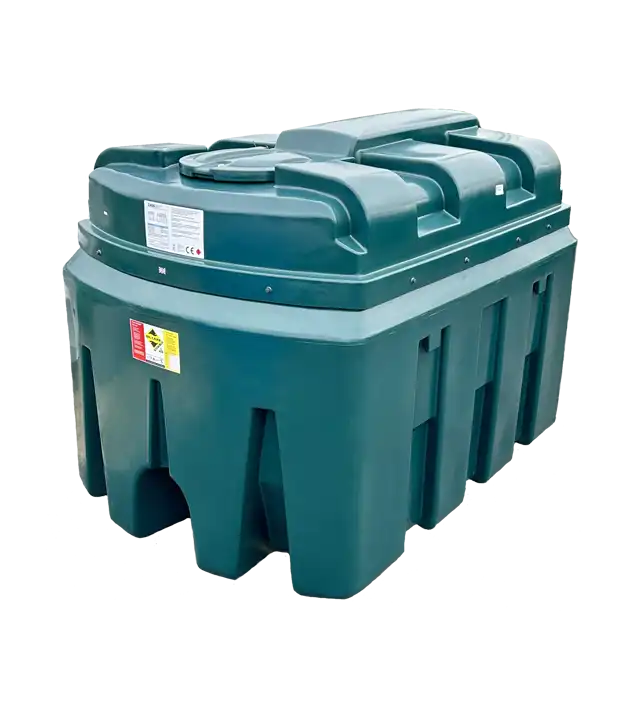
Bunded oil tanks
- Inner tank plus secondary containment
- Designed to contain a leak from the primary tank
- Often suitable for a wider range of domestic sites
- View bunded oil tanks
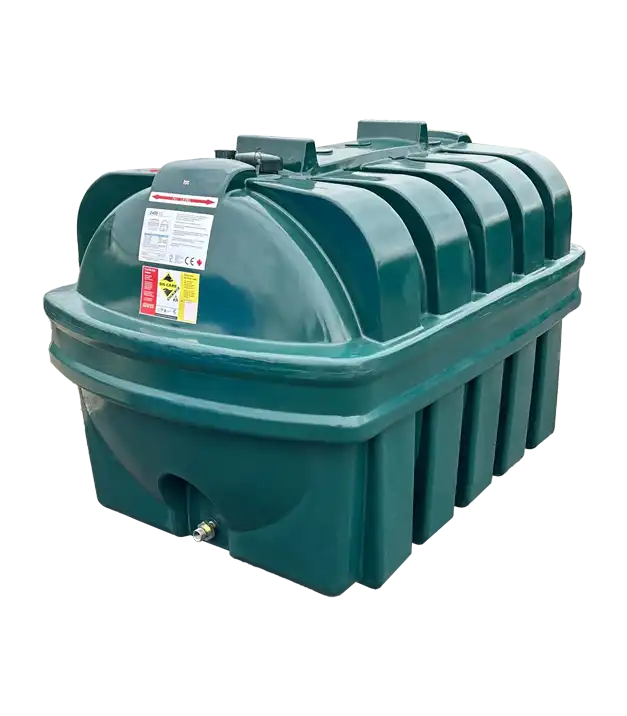
Single skin oil tanks
- One primary oil-containing shell
- Usually lower initial purchase cost
- Only suitable where the site assessment permits
- View single skin oil tanks
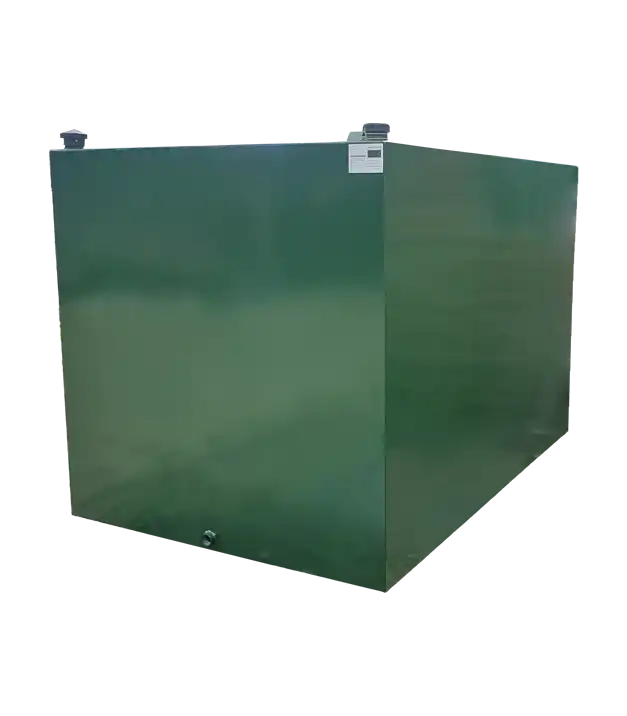
Steel oil tanks
- Material choice rather than containment type
- Can be single skin, bunded or fire protected
- Useful where strength or bespoke dimensions matter
- View steel oil tanks
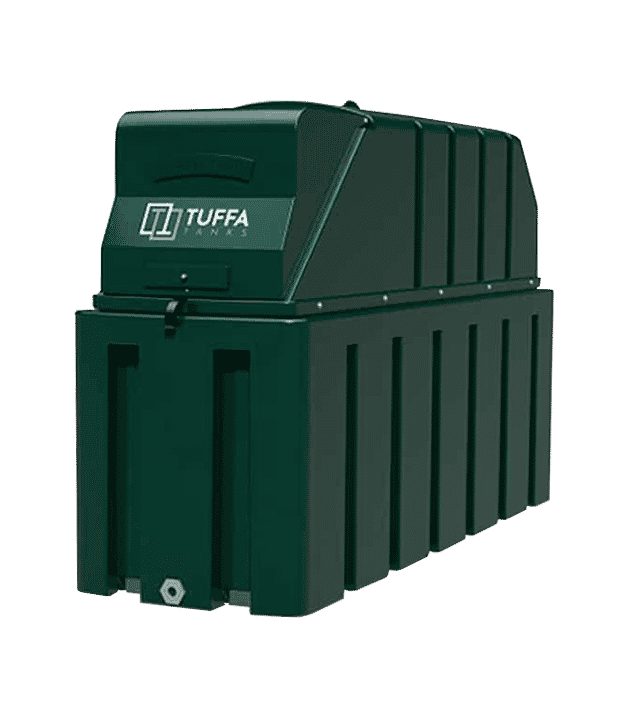
Fire-rated oil tanks
- Integral tested fire-protection system
- Can help where normal fire separation is difficult
- Certification and installation conditions must be checked
- View fire-rated oil tanks
What this really means: “bunded”, “steel” and “fire-rated” do not describe mutually exclusive products. For example, a tank can be a steel, bunded, fire-rated oil tank. Start by asking what level of containment, material and fire protection the site needs, then choose the capacity and shape.
When a bunded tank is the stronger option
A bunded oil tank has a primary tank inside secondary containment. If oil escapes from the inner tank, the bund is intended to contain it rather than allowing it to spread into the surrounding ground or drainage system.
- Useful where a spill could reach drains, water or sensitive ground
- Required in England for certain domestic situations after risk assessment, including tanks above specified capacity thresholds
- Commonly chosen for replacement projects where additional leak protection is preferred
- For a single domestic tank that requires a bund, GOV.UK guidance says the bund should hold 110% of the tank capacity
When a single skin tank may still be considered
A single skin tank has one main shell holding the heating oil and no integral secondary containment. It can still be suitable in some low-risk domestic situations, but suitability should be confirmed by a competent installer rather than assumed because the existing tank is single skin.
- The site must meet the relevant environmental and installation requirements
- Capacity, drains, watercourses, wells, boreholes and spill pathways matter
- The installer also considers fill and vent visibility, access and the property served
- Lower purchase cost should be weighed against the absence of integral secondary containment
Simple rule: do not choose between bunded and single skin on price alone. The site risk assessment comes first. In England, GOV.UK lists circumstances where secondary containment is required for domestic installations, including certain locations near water, drains or drinking-water sources and tanks with a capacity above 2,500 litres.
Steel oil tanks
Steel describes the construction material, not the containment level. Steel tanks can be manufactured as single skin, bunded or fire-protected systems.
Steel is worth considering where the project calls for rigidity, impact resistance, unusual dimensions or a more bespoke tank. Because steel tanks are fabricated rather than rotationally moulded, manufacturers can often offer more flexibility for non-standard sizes.
Maintenance matters. Check protective coatings, welded areas, fittings and the supporting base for corrosion, damage or water traps. Oil Tanks Plus lists domestic and commercial options in its steel oil tank range.
Fire-rated oil tanks
Fire-protected tanks incorporate a tested fire-resistant system around the fuel storage tank. Some specialist products are certified for defined fire-resistance periods, commonly offered in 30- or 60-minute options. The exact rating, certification and installation conditions must be checked for the specific product.
They can be useful where the preferred tank position is too close to a building, boundary or other fire risk for the standard arrangement. In other cases a suitably designed fire barrier may be used instead.
A fire rating does not replace pollution protection. A fire-rated tank may also need to be bunded, and the site must still comply with the product certification, manufacturer instructions and applicable building requirements. Browse fire-rated oil tanks.
England fire-separation reference: Approved Document J gives a conventional benchmark of at least 1,800mm from a building and at least 760mm from a boundary where no further fire-protection provisions are needed for the domestic heating-oil installations covered by that guidance. Where those distances cannot be achieved, compliant fire-protection measures may be required. Requirements differ across the UK, so the installer should confirm the rules that apply to the property.
Not sure which tank your property needs?
A site assessment can identify the right containment, material, capacity and fire-protection requirements before you order a replacement.
Plastic is often practical for domestic replacements
- Does not rust
- Usually lighter to handle than a comparable steel tank
- Available in many standard domestic capacities
- Slimline and compact shapes can help with restricted access
- Available as bunded and, from some manufacturers, fire-protected designs
Steel can be better for specialist requirements
- Strong, rigid construction
- Useful where accidental impact is a concern
- Can suit commercial and agricultural applications
- Bespoke dimensions may be available
- Can be supplied in bunded and fire-protected configurations
There is no universal winner. A straightforward domestic replacement may suit a plastic bunded tank. A steel tank may be the better choice where the location is exposed to impact, the dimensions are unusual or a specialist fabricated solution is needed. The tank material should be selected after the installation constraints are known.
1. Required capacity
Choose enough storage for normal household demand and practical delivery quantities without assuming that the old tank size must be copied. The available footprint, fuel use and delivery pattern all matter.
2. Pollution risk
Check drains, watercourses, wells, boreholes, groundwater risk and the likely direction of a spill. This is one of the main factors that determines whether secondary containment is required.
3. Fire separation
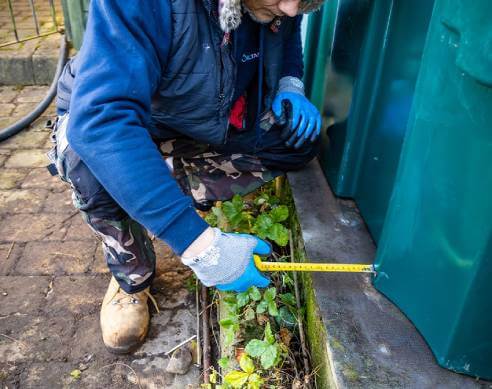
Measure the proposed tank position in relation to buildings, openings, eaves, boundaries and combustible structures. Where standard separation cannot be achieved, compliant fire protection may be needed.
4. Access to the tank position
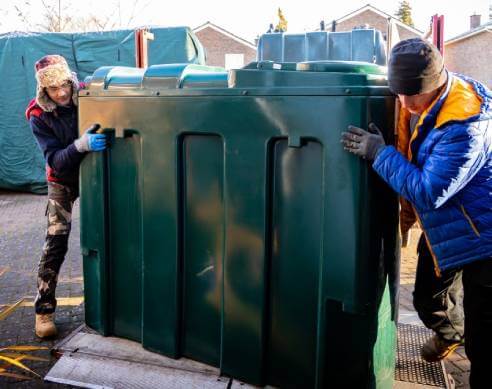
The replacement has to travel from the delivery vehicle to the installation point. Gates, side passages, walls, steps and turns can determine whether a standard, slimline or bespoke tank is practical.
5. Base condition
The tank needs stable, level, non-combustible support suitable for its weight and dimensions. An existing base should be checked rather than automatically reused.
6. Impact and security risk
Driveways, parking areas, machinery and working yards can expose a tank to accidental impact. Barriers, tank material and positioning may need to be considered.
7. Installation and future maintenance access
The installer needs safe access to connect, inspect and maintain the system, while oil deliveries need a practical fill arrangement. The final choice should work for the whole life of the installation, not just fit through the gate on installation day.
A replacement project is more than a tank swap. The old location, base and tank type should be reassessed because the safest or most practical solution may have changed since the existing installation was completed.
Oil Tanks Plus can handle the replacement as a complete job, including the new tank installation and removal of the redundant tank. See the oil tank replacement guide for more detail.
A professional replacement may include:
- Assessing the old tank and proposed location
- Recommending a suitable replacement tank
- Pumping out usable heating oil where appropriate
- Disconnecting and decommissioning the old tank
- Preparing or replacing the base if required
- Installing and connecting the new tank
- Transferring suitable fuel into the new tank
- Removing and recycling the redundant tank
Related services include oil tank removal and recycling and oil tank disposal.

Oil tank advice, installation and replacement across the UK
Oil Tanks Plus has over 25 years of experience helping customers with oil tank installation, replacement, removal and maintenance. The team can assess the property, help select a suitable tank and coordinate the work from removal of the old tank through to the new installation.
For commercial or industrial storage requirements, see our commercial oil tank services.
Get advice before ordering if:
- You are unsure whether the site requires bunding
- The tank is close to a building, boundary, fence or opening
- There are drains, watercourses, wells or boreholes nearby
- The access route is narrow or awkward
- The existing base is cracked, undersized or uneven
- The old tank is leaking, bulging, corroded or unstable
- You need a bespoke or commercial tank
Do not rely on the old installation as your specification
An existing tank can be the wrong size, in a poor position or no longer appropriate for the current surroundings. Extensions, new fences, drainage changes, landscaping and changes in building use can all affect the replacement decision.
Building and environmental requirements also vary across England, Wales, Scotland and Northern Ireland. A competent installer should assess the actual site and confirm what applies before the tank is ordered.
For ongoing condition checks after installation, see oil tank maintenance.
For technical and regulatory background, these sources are useful starting points:
- GOV.UK: storing oil at your home — domestic installation, risk assessment and secondary-containment guidance for England.
- GOV.UK: Approved Document J — statutory guidance for combustion appliances and fuel storage systems in England, including fire-protection guidance for oil storage.
- OFTEC: tank support guidance — practical advice on stable, level and non-combustible tank bases.
- OFTEC FAQs — consumer guidance on oil tank siting, regional requirements and competent installers.
- Tuffa: guide to fire-rated oil tanks — manufacturer guidance explaining integral fire-protected tank systems and certified fire-resistance options.
This article is general guidance. The exact requirements for a new or replacement tank depend on the property, location, tank capacity, intended use and the part of the UK in which it is installed.
What are the main types of domestic oil tanks?
The main categories homeowners encounter are bunded, single skin, steel and fire-rated tanks. These categories overlap because bunding describes containment, steel describes material and fire rating describes fire protection.
Is a bunded oil tank better than a single skin tank?
A bunded tank provides secondary containment around the primary tank, so it offers additional protection if the inner tank leaks. A single skin tank may still be suitable for some assessed low-risk domestic sites where the relevant requirements allow it.
Does a domestic oil tank have to be bunded?
Not every domestic installation is identical. In England, the installer carries out a risk assessment and bunding is required in specified higher-risk situations, including certain locations near drains, water or drinking-water sources and for tanks above 2,500 litres. Other UK nations have their own requirements.
Are steel oil tanks always bunded?
No. Steel describes the tank material. A steel tank can be single skin, bunded or supplied with additional fire protection.
What is the difference between a bunded and a fire-rated oil tank?
Bunding is secondary containment designed to control oil escaping from the primary tank. Fire rating relates to protection of the stored fuel from an external fire for a certified period. One tank can provide both features.
Are plastic oil tanks better than steel tanks?
Neither material is best for every site. Plastic is corrosion-resistant, relatively light and widely available in domestic shapes. Steel can offer rigidity, impact resistance and more scope for bespoke dimensions. The site conditions should decide the material.
Can a fire-rated oil tank be installed closer to a building?
A correctly certified fire-protected tank can provide a compliant solution where normal separation distances cannot be achieved, but the exact location must follow the product certification, manufacturer instructions and applicable building requirements.
Can I replace my old oil tank in the same position?
Possibly, but the position should be reassessed. Changes to the property, drainage, boundaries, base or current installation requirements may mean a different position or tank specification is more suitable.
Do I need a new base when replacing an oil tank?
Not automatically. The existing base should be checked for size, level, stability, condition and suitability for the replacement tank. If it is damaged or unsuitable, it may need repair or replacement.
Which oil tank is best for most homes?
For many domestic replacements, a plastic bunded tank is a common option because it combines secondary containment, corrosion resistance and a wide choice of sizes. The best tank for a particular home can still be different because access, capacity, pollution risk, fire separation and impact risk all matter.
Ready to choose your replacement oil tank?
Tell Oil Tanks Plus about your current tank, access and property so the team can recommend the next step.
Share This: